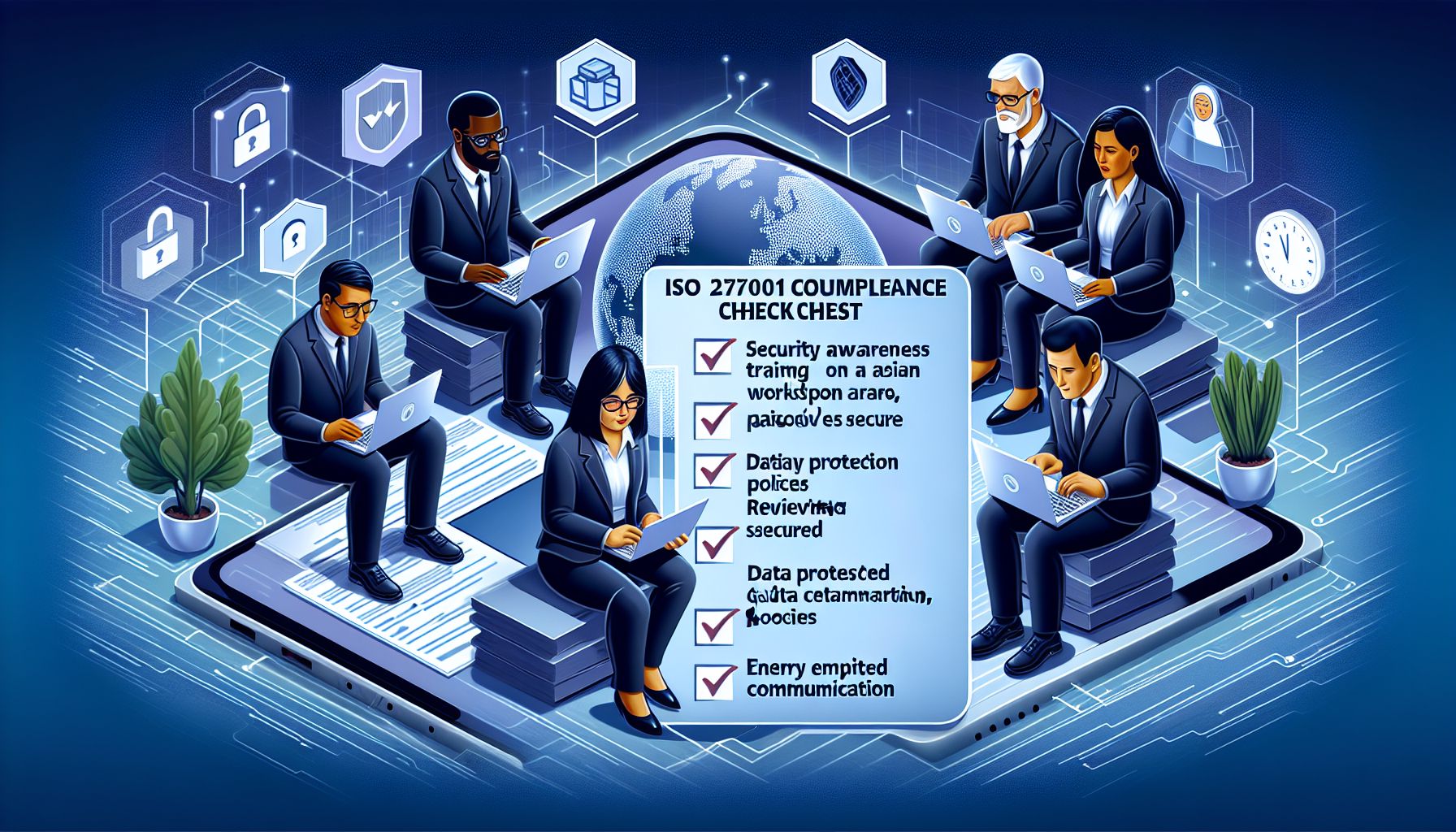
ISO 27001 is the international standard for information security management systems (ISMS). It helps organizations protect their information systematically. Remote teams face unique challenges in meeting these standards. This checklist helps remote teams align with ISO 27001 requirements effectively.
Understanding ISO 27001
ISO 27001 provides a framework for establishing, implementing, maintaining, and continually improving an ISMS. It focuses on managing the security of information assets. The standard helps teams identify risks and take appropriate measures while working remotely.
Benefits of ISO 27001 Compliance for Remote Teams
- Enhanced Security: Protects sensitive data and reduces the risk of breaches.
- Increased Trust: Builds confidence among clients and stakeholders regarding data protection.
- Regulatory Compliance: Helps in meeting legal and regulatory requirements for data security.
- Improved Processes: Establishing processes leads to better control over information security.
ISO 27001 Compliance Checklist
This checklist covers essential areas for ISO 27001 compliance in remote teams. Following it helps ensure secure operations.
1. Define the Scope
Identify and define the scope of the ISMS. Determine the boundaries of the system, include each aspect of remote work, and document the process.
2. Conduct a Risk Assessment
Analyze potential risks to your information assets. Implement a process to identify, evaluate, and prioritize risks. Ensure that remote work environments receive specific attention.
3. Create an Information Security Policy
Develop a clear information security policy. This policy must define roles, responsibilities, and security measures. Ensure all remote team members understand this policy.
4. Establish Asset Management
Identify all assets used by remote teams, including hardware, software, and data. Maintain an inventory of these assets. Classify assets based on their importance and sensitivity.
5. Implement Access Control
Develop access control measures. Limit access to sensitive information based on roles and responsibilities. Use authentication methods to verify user identities.
6. Develop a Training Program
Train remote team members on information security practices. Conduct regular training sessions to keep everyone updated on policies and procedures. Ensure that all employees understand the importance of data protection.
7. Establish Incident Management Procedures
Create procedures for managing security incidents. Define how to report, respond, and recover from incidents. Ensure remote teams know their roles in the incident management process.
8. Monitor and Review
Regularly monitor and review the ISMS. Conduct audits to assess its effectiveness. Gather feedback from remote team members to identify areas for improvement.
9. Continuously Improve
Implement a culture of continuous improvement. Use feedback from audits and incidents to enhance policies and procedures. Encourage remote teams to contribute to the improvement process.
Best Practices for Compliance
Adhering to best practices enhances compliance efforts. Here are some strategies for remote teams:
1. Use Strong Passwords
Encourage remote team members to create strong, unique passwords. Implement policies requiring regular password updates.
2. Implement Multi-Factor Authentication
Use multi-factor authentication for accessing sensitive information. This extra layer of security helps protect data from unauthorized access.
3. Secure Communication Channels
Use secure communication tools when discussing sensitive information. Ensure that all data transfers are encrypted to safeguard against unauthorized interception.
4. Regularly Update Software
Encourage remote teams to keep software and systems updated. Regular updates protect against known vulnerabilities and enhance security.
5. Limit Use of Personal Devices
Establish policies regarding the use of personal devices for work purposes. Encourage the use of company-approved devices to minimize security risks.
Common Challenges for Remote Teams
Remote teams may face several challenges in achieving ISO 27001 compliance. Understanding these obstacles helps in developing suitable strategies.
1. Communication Barriers
Remote teams may experience communication issues. Lack of face-to-face interaction can lead to misunderstandings about security policies. Regular virtual meetings can help bridge this gap.
2. Diverse Work Environments
Team members may work from various locations with differing security levels. Ensure that everyone understands the importance of securing their workspace.
3. Lack of Awareness
Not all employees may fully understand ISO 27001 requirements. Ongoing training and clear documentation can improve awareness and compliance.
Conclusion
ISO 27001 compliance is crucial for remote teams. Following this checklist helps ensure that your team manages information security effectively. By defining processes, conducting training, and maintaining a strong security culture, remote teams can uphold the highest standards of information security.
Additional Considerations
ISO 27001 compliance is an ongoing process. Teams should regularly revisit their practices and policies to adapt to changes in the threat landscape.
Pros and Cons of ISO 27001 Compliance
Pros:
- Protects information assets.
- Improves trust with clients.
- Facilitates regulatory compliance.
Cons:
- Can require significant resources.
- May involve a steep learning curve.
- Compliance process can be time-consuming.
Real-Life Example
A remote marketing team adopted ISO 27001 standards. They defined their ISMS scope, conducted training, and implemented access controls. As a result, they enhanced data security and built client trust, leading to increased business.
By following this checklist, remote teams can effectively manage their information security needs in alignment with ISO 27001. Always remember, continuous improvement is key to maintaining compliance and protecting valuable data.